Museum of Discovery & ScienceWebsite, Augmented-Reality, 3D03 / 05
More discovery.For everyone.
Connecting the Museum of Discovery and Science through a new website, a shared publishing structure, and a companion app.
The museum’s energy, carried into its digital front door.
So much to discover.
Too much to untangle.
Across 150,000 square feet, MODS brings together interactive exhibits, learning labs, and attractions. Online, that breadth was difficult to navigate. Families, often mothers planning the visit, educators arranging field trips, and donors all needed clearer ways in.
I partnered with Gary Tarr at Free Range Productions to structure and pitch the project. After the award, I directed the design and build of the website and companion app.
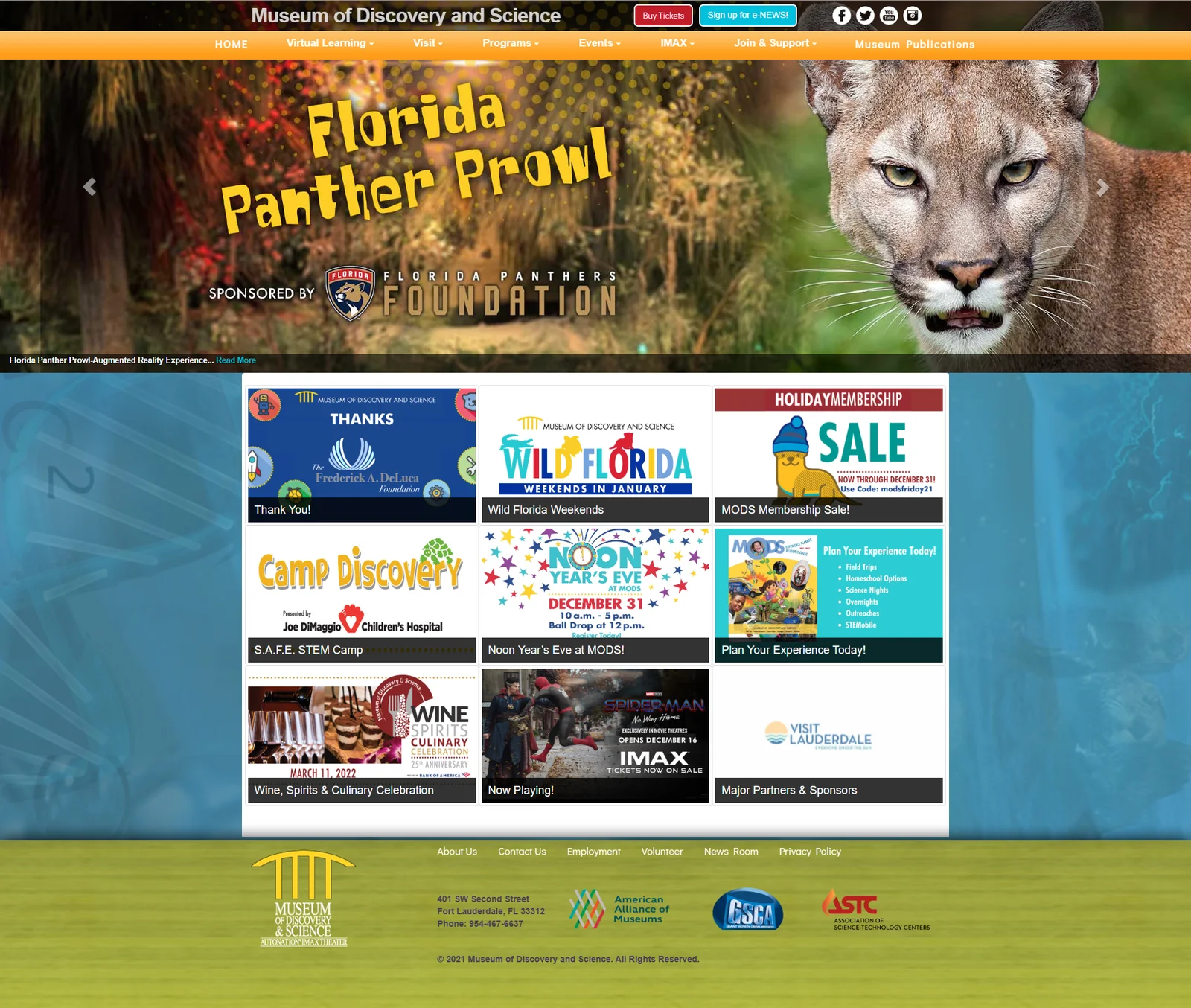

Repeated navigation and long lists mixed programs, events, and exhibits. Everything was a page, without a shared taxonomy. Visitors called for answers the site should provide; every update passed through one web administrator.
Organize the offer.
Then open it up.
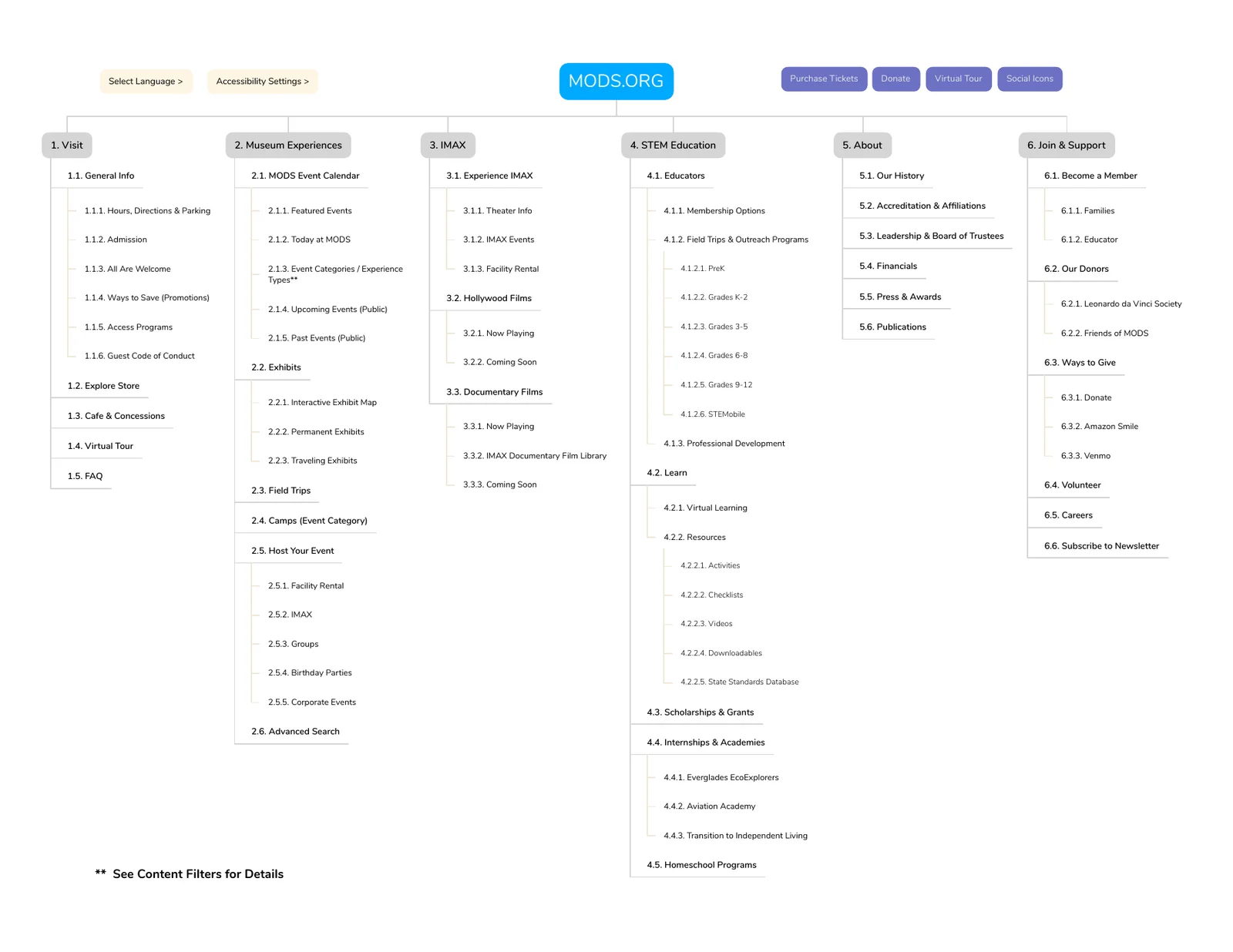
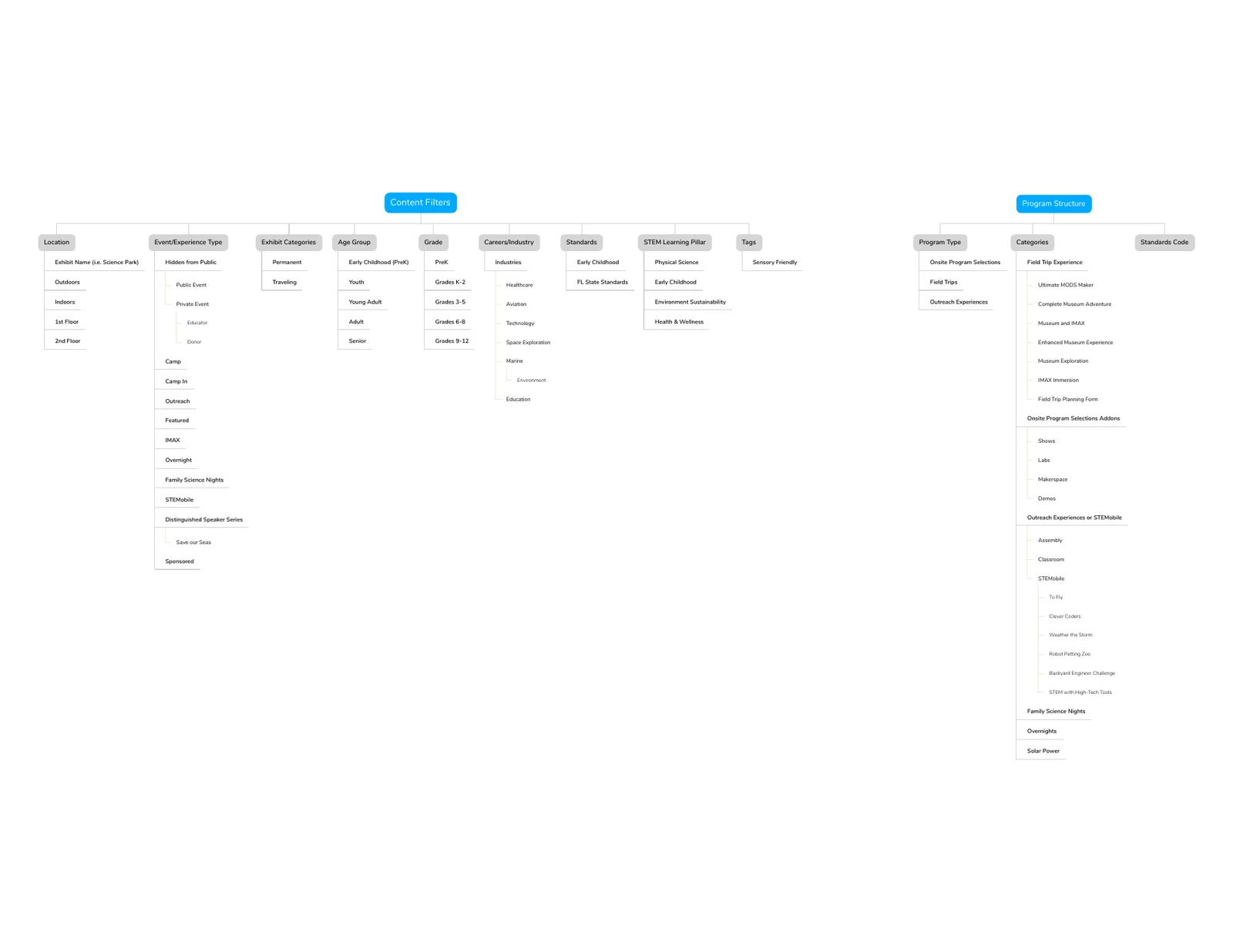
I separated visiting, experiences, IMAX, education, and support into clear destinations. The content model defined offerings by location, age, grade, experience type, and learning standards, giving people useful ways to find what fits.
Field trips and outreach gained a deliberate structure. Making the educational offer and its standards visible also supported the museum’s goal of strengthening state grant applications and donor funding.

Give each exhibit
a useful shape.
The wireframe brings the exhibit’s story, visit details, location, and related experiences into one page. The same structure makes very different attractions easier to understand.
Give teams ownership.
I created departmental publishing flows so routine updates could move beyond a single administrator.
- HR
- Careers & job listings
- IMAX
- Movies & showtimes
- Marketing
- Events, blog & press releases
- Administration
- General content, forms & exhibit and facility management
Learn. Play. Create.
Before you even arrive.
A stakeholder workshop I coordinated established those three words as the experience’s guiding idea. The client also asked for diversity to be visible. I shaped the homepage around experience, inclusivity, and STEM, connecting excitement to a clear ticket action.
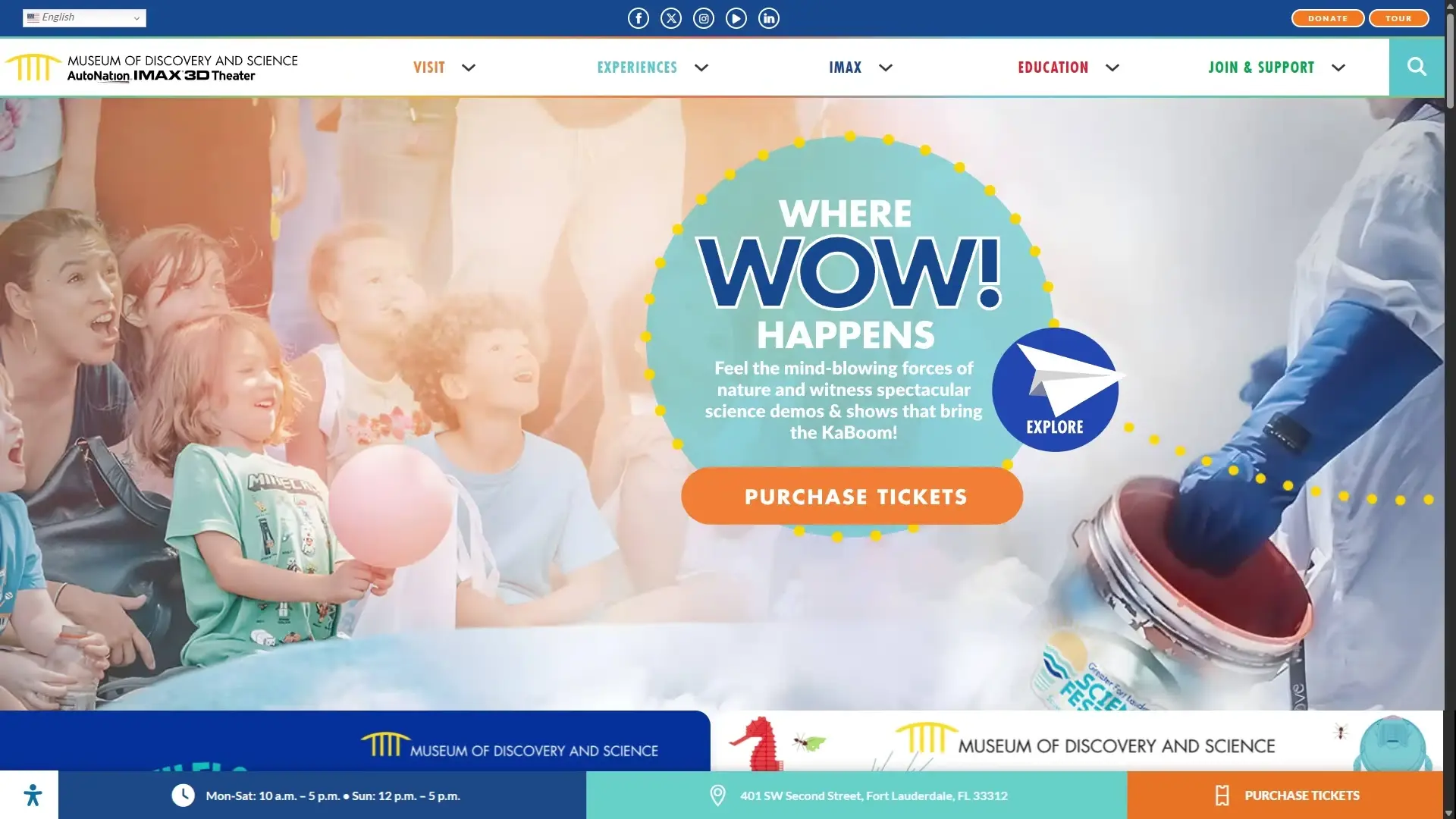
The paper airplane comes from a hands-on STEM activity in the To Fly exhibit.
A familiar path
A subtle ball leads the scroll, borrowing its movement from the Great Gravity Clock.
Color as wayfinding
I tied the rainbow palette to distinct entrances in the mega menu, giving the color a navigational role.
Real moments of play
The girl with the parachute echoes an actual exhibit photo opportunity.
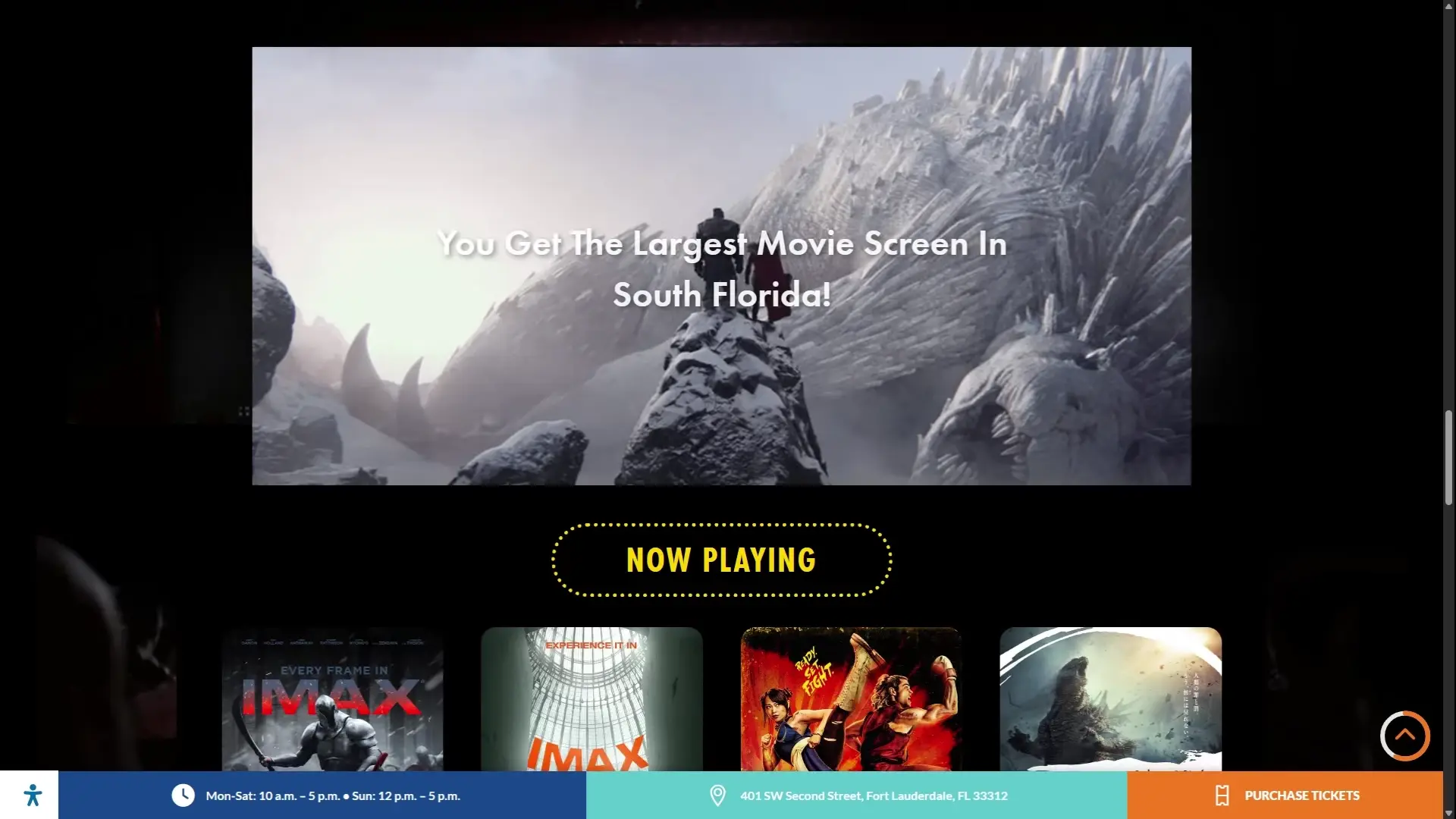
The scroll-triggered IMAX sequence puts the viewer in a seat to reveal the scale of the screen.
From a living exhibit
to a field guide.
The Food Forest extends discovery into the grounds. Children scan a plant’s QR code to open its profile, while the species database lets visitors browse and search the collection. A shared profile structure keeps educational information consistent.


A searchable collection online; a plant-specific learning moment at the exhibit.
Carry the discovery
into the museum.
The student-created app already had a Panther Prowl AR experience, but its source files were unrecoverable and its functionality was limited. I rebuilt it in Flutter for iOS and Android, expanding it into a companion for navigating the museum and accessing the renewed AR experience.
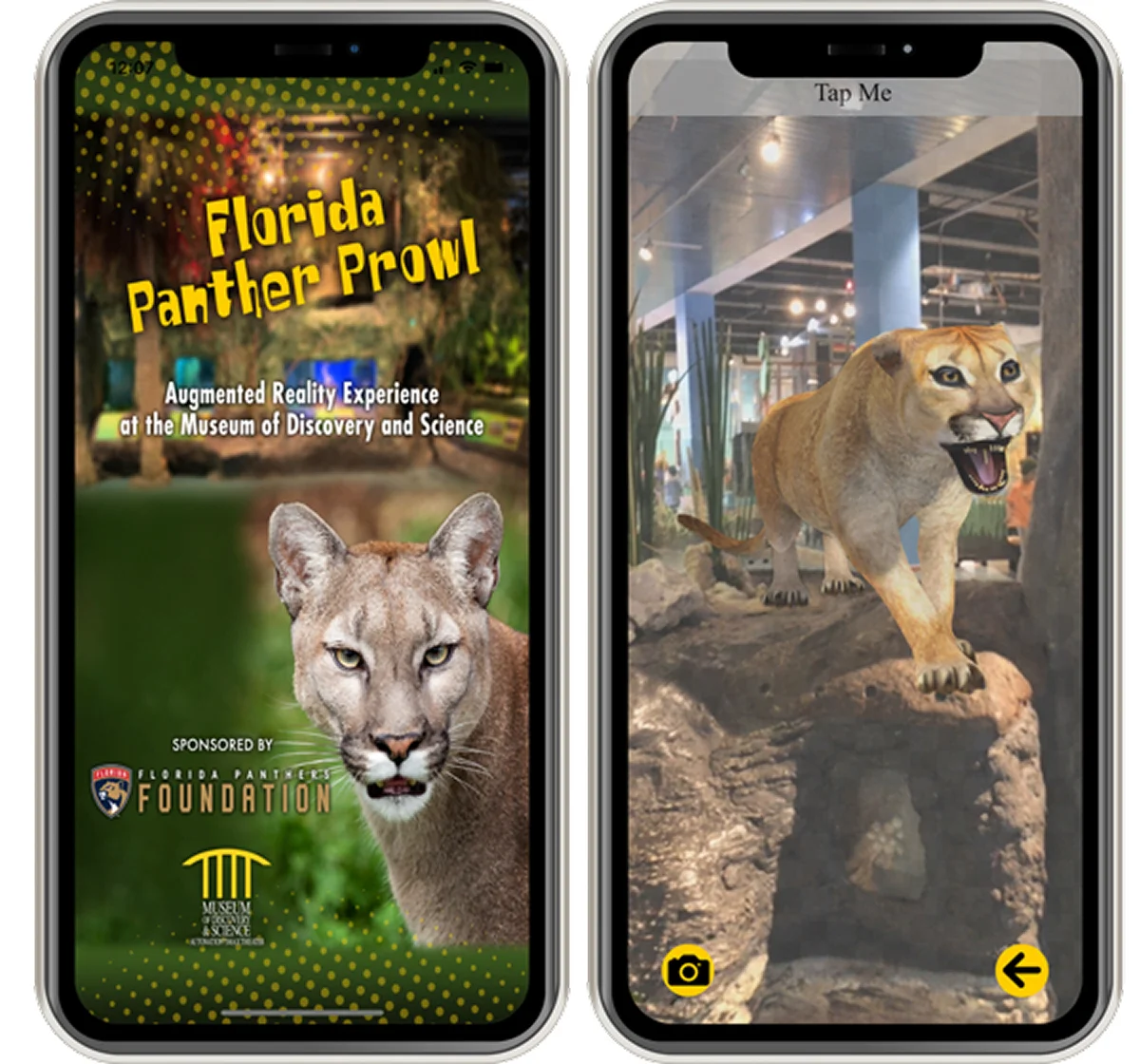
A standalone AR experience to rebuild.
Museum navigation and Panther Prowl in one app.
A new panther.
A new range of movement.
I worked with a 3D artist to recreate and rig a panther and cub. I then created six animations for the app: jump, walk, swat/attack, prowl, sit, and idle.
Built for discovery.
Ready for growth.
The new website gave MODS a foundation for larger campaigns, a more consistent brand, and closer cultural partnerships. Departments could publish their own work, while shared event and program pages gave each initiative a clear destination.
For FY 2023–24, the museum reported 985,000 users and 2.8 million pageviews, describing these web results as a “90%+ increase.” Its wider audience engagement efforts also grew digital subscribers by 121% over 2020.
- Reported increase · Web results
- 90%+
- Digital subscriber growth · Over 2020
- 121%
Source: MODS Audience Engagement, September 2024. Web growth was reported alongside the FY 2023–24 totals without a comparison period. Subscriber growth reflects the museum’s broader marketing and email efforts.
Reusable pages and departmental publishing gave the team a place to build campaigns, connect promotions to events, and keep information current.
Science Festival, Discovery Spot & MAGNA-TILES® Studio launchMy creative direction helped steer the museum’s brand guide, extending the website’s visual language into a more consistent identity across communications.
Shared direction across digital and campaign workClear event destinations made it easier to connect cultural partners directly to the programs they supported. MODS reported collaborating with more than ten local cultural organizations on events engaging diverse audiences.
10+ local cultural organizations